

Our latest report shows that the cost of regulation increased significantly during the 2010s – despite repeated promises from Government to shrink the regulatory burden.
Read more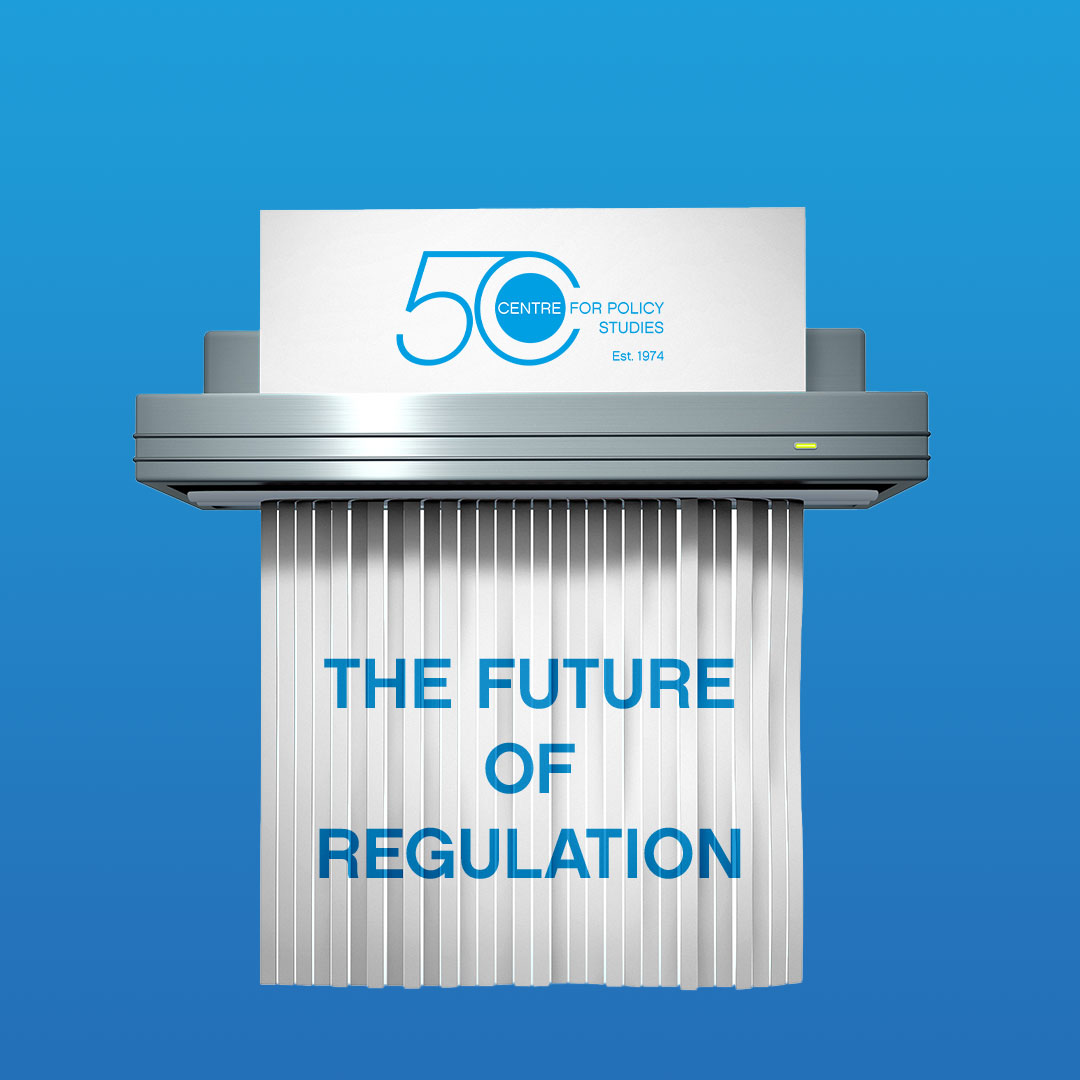
Our latest report shows that the cost of regulation increased significantly during the 2010s – despite repeated promises from Government to shrink the regulatory burden.
Read more
Join us as we reflect on conservative environmentalism, nearly 30 years since Andrew Sullivan's CPS pamphlet 'Greening the Tories'.
Sign up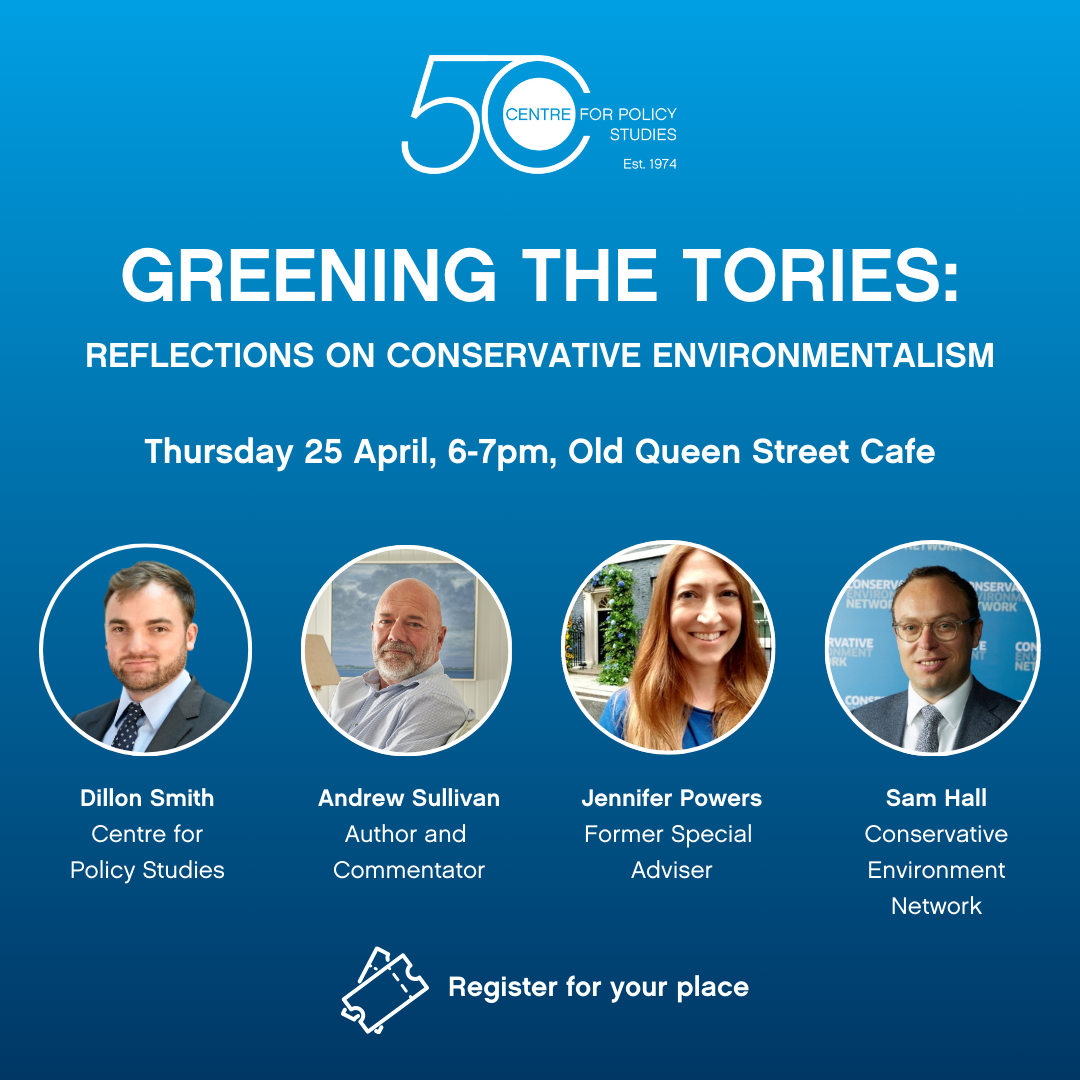
Apply now for our year-long programme, offering an introduction to the intellectual, academic and political arguments for free markets
Find out More
Since 2010, successive governments have promised to cut regulation, with some even claiming to have succeeded. But are they telling the truth? Sign up to a public panel launching new CPS report 'The Future of Regulation'.
Sign up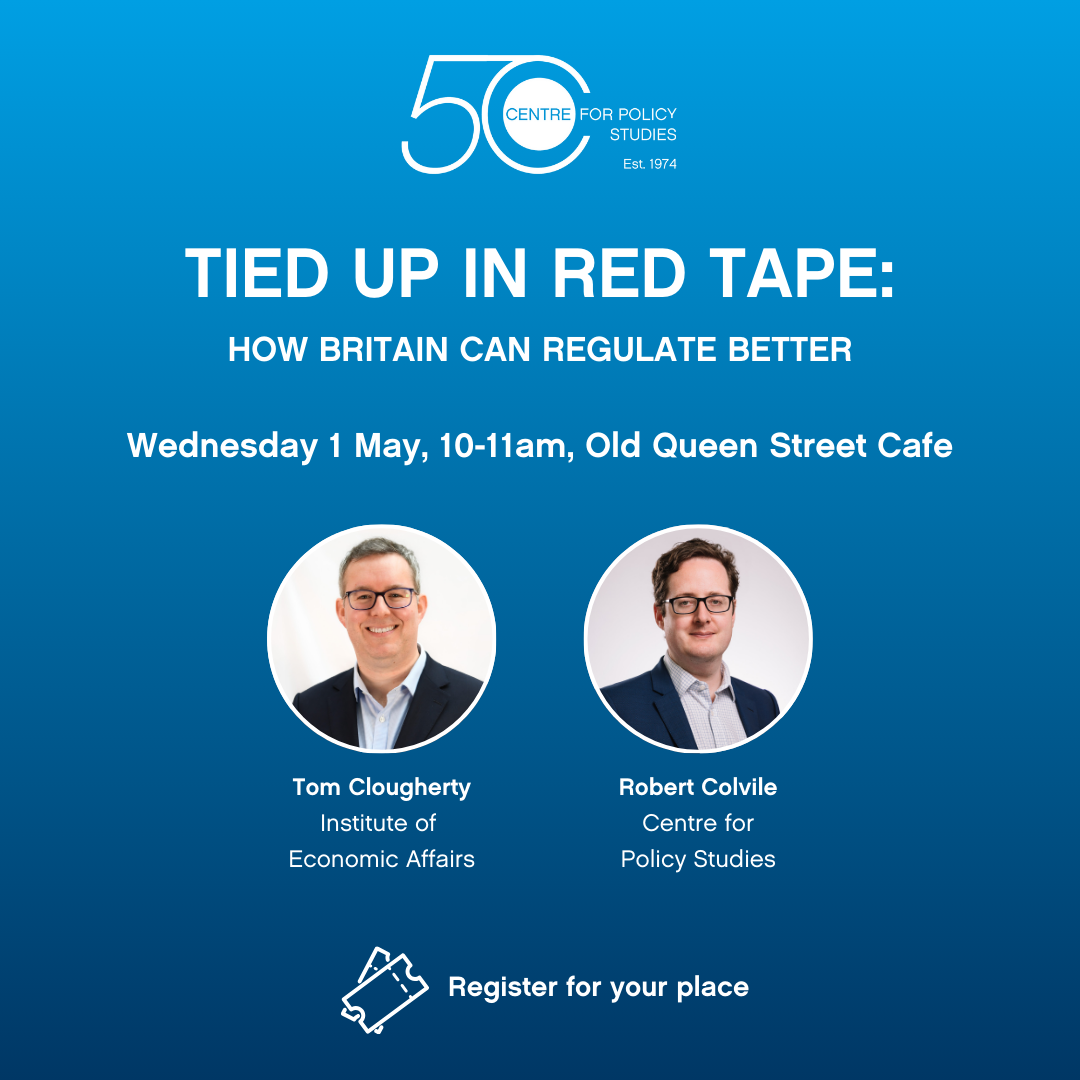
‘Shaping the Debate: The Centre for Policy Studies in 50 Papers’ provides a brief description of the argument, something of the political and intellectual context in which it was written, and a sense of why it is important
Read more
CPRE risks 'destroying the future' of those living in the countryside by campaigning against housing, says Robert Colvile.
Read more
The leading independent centre-right think tank
FIND OUT MOREWe rely entirely on donations to fund our research
SUPPORT OUR WORK

"*" indicates required fields


© Copyright Centre for Policy Studies. Website by Lewis Edward


